Sunday, November 27, 2011

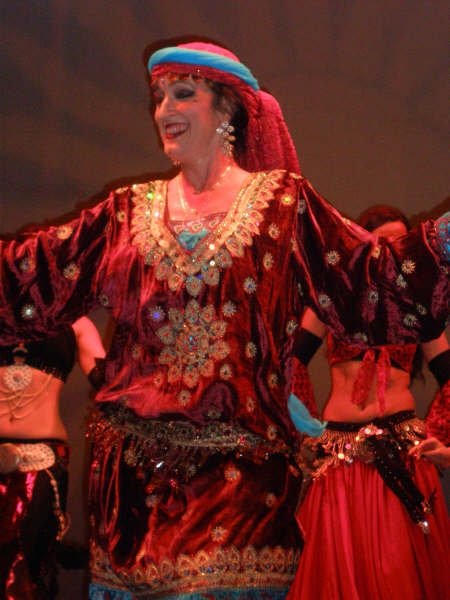
DANCERS BACKSTAGE RITUALS PART SIX: ARTEMIS MOURAT AND TAMALYN DALLAL


This is part six in an on-going series of articles about the ways that well known- and in some cases, wildly famous- dancers prepare for their shows. Everyone I have spoken with has a highly personal take on getting ready for taking the stage, but one similar thing I've noticed while talking to my colleagues is that many of us seem to be very spiritual in general, and especially in relation to their dance practice.

For years, I assumed I was alone in this… but that was probably just because I just hadn’t discussed my feelings with anybody.

From the very beginning of my career, I would always become very emotional before I took the stage- and by using the word "emotional", I'm not referring to stage fright. It was more like a private, internal feeling that I would get just before I stepped onto the stage. Waves of gratitude and even disbelief would overwhelm me. Though I knew I had worked very hard for years to get to the point I was at, I would be overcome by a sense of my own good fortune and I felt humbled that I was being allowed to live out my dreams.

I have always been blessed with creativity, and I have always wanted to dance, but for me, dancing wasn’t always an easy journey. From my first performance onwards, every time I was about to dance, I would thank the universe and the heavens for being allowed this chance, and I would silently pray that that my performance would be “worthy”, both for the audience, and for whatever spiritual forces were granting me this beautiful opportunity. And I still do.

The two dancers- Artemis Mourat and Tamalyn Dallal- whose quotes you will see below, both seem to feel that in their dancing, they are connecting with a very sacred thing, in very much the same way as I do. In an odd coincidence, both of them are also writers and globe trotters as well as dancers, just like me.

Since we are in the midst of The Holidays, I thought it would be a good time to put up a post that is a bit infused with the spiritual side of dance.

Also, as I write this, I have just gotten off the phone with the highly acclaimed Artemis Mourat. She is a lovely person both on and off stage, quite down to eath and extremely funny. Our conversation was all about dance, history and culture, but of course we giggled a lot, too!

A legend in her own time, a belly dance pioneer and an expert on Turkish and Romany dances, Artemis is practically a household word in the belly dance community. She has done decades of field research all over the globe. She has also performed and taught worldwide, made music CDs and instructional DVDs, and has always been extremely generous with her wide scope of knowledge. To say that she has inspired thousands of dancers during the course of her rich career would be a vast understatement!

Here are Artemis’ words:

I pray before each show. I ask that light shine through me onto all who see me. I asked that everybody there leave the show happier than they were when they got there. I ask to be worthy to carry this torch. I ask that the blood of the dancers who have come before me should flow through my veins. And I ask for a spiritual wall of protection around me and around all of the people there.
In addition to this, I do the usual physical warm ups and one glass of wine is mighty nice.
--ARTEMIS MOURAT


Tamalyn Dallal performed and taught around the world since 1976. In addition to being a superlative dancer, has authored three books, including her latest “40 days And 1,001 Nights”, where she lived for forty days in five Muslim countries, and recorded her experiences. Not only that, she produced a documentary film and two music CDs, both based on the book! In 1990 she founded the Mid Eastern Dance Exchange, which mentored dancers all over the globe. The last time I bumped into Tamalyn, it was this past June in Cairo. I haven’t spoken to her lately, but I know she id doing a continuing documentary series called "Dance On Film" and Ethiopia is next. Here is a link to her Kickstarter site to fund the project:
http://www.kickstarter.com/projects/1758509566/dance-on-film-series-ethiopia-is-next/backers

And here is Tamalyn’s pre-performance ritual:

I usually say a prayer and consider how lucky I am to be able to dance, free to dance, and live in a place where women have the luxury of taking a dance class. So many places, people have hard lives and struggle to eke out a living and feed their families.
We are among the privileged few who can dance our hearts out in beautiful costumes for the sheer joy of it. I then think of my dance being offered to the audience as a gift.
--TAMALYN DALLAL


To read more about these infinitely inspirational dancers, please visit their websites:
Artemis Mourat: http://www.serpentine.org/artemis/artemis.htm

Tamalyn Dallal: http://www.tamalyndallal.net/homepage.html


Photos: Artemis ( in black) & Tamalyn ( with headwrap)

Thursday, November 24, 2011

DANCE PARTNERS


It’s Thanksgiving, and I would like to take this moment to thank all of the “dance partners” out there…all the spouses, significant others and close friends who make it possible for all of us performers to be able to do what we do.

As an entertainer, having a supportive partner is paramount. Our partners are like The Great Oz, they’re the people behind the curtain…and behind the scenes, backstage, schlepping our bags, building our props, taking photos, taking us to the airport at ridiculously early hours as we leave for workshop weekends…. and picking us up when we come back, sore and hoarse and full of stories about people they don’t know.

Our dance partners are the ones driving back to get the costume piece that was left out of the gig-bag, the ones dee-jaying or sitting at the door taking tickets at the hafla, they are the stage managers and lipstick roadies, and the ones who tell us we are lovely when all the make up is off.

Our dance partners are the ones who allow us to rope them into burning cd's, being emcees, or doing something crazy in costume as part of our shows…cause nobody else would do it! They’re the people who bring us food in class when we are starving, who send us “Break a leg!” texts when we are backstage at shows they couldn’t attend.

Our dance partners are the men and women who make our websites, and make us coffee when we have early classes to teach. They’re the “civilians” who know (by osmosis) how to layer complicated moves, the ones who surprise you by knowing the difference between Egyptian and Turkish music, or classic and neo-burlesque. They're the caretakers who know when you need ice and ibuprophen, and they rub your sore muscles when you're in pain. Our dance partners are already in bed by the time we get home from gigs, but they don't mind that we came home so late. They are the ones who don't get to see us very often, but they never complain.


They are the patient souls who don’t grumble when they have to go to work covered in your body glitter, or the odd rhinestone… but wear the sparkles proudly, because they are so happy to be with a dancer, that they want the world to know!

This is for all the belly dance widowers, the burlesque husbands, and the supportive best friends who never so much as took a dance lesson but come to all the shows…thank you all so much- we couldn’t do it without you!


Photo: The Princess and her favorite dance partner, james

Tuesday, November 15, 2011

BELLY DANCE BODY ADORNMENT


Something all belly dancers have in common is a love of body adornment. We pile on make up, jewelry, wigs, hair decorations, costumes and permanent or temporary tattoos until we look like human Christmas trees, or a prize doll that you’d win at a carnival!

Many of the cosmetics and accoutrements we use are modern inventions, and worn just for fun, such as body glitter…but a lot of the adornments we wear come from customs that are probably older than recorded history.

Here are some types of body decorations that have been traditionally linked specifically to belly dance or to cultural, religious and ceremonial traditions that have been adopted by modern-day belly dancers:

Kohl
Probably the world’s first and most famous eyeliner, kohl has been used constantly from ancient times to the present day. Thousands of years ago in Egypt, the luxurious fine black powder rimmed the eyes of women, as well as men and children, and acted not only as a cosmetic, but served to protect the eyes from the glare of the hot desert sun, and was also known for it’s antibacterial properties. Ancient Egyptian art included depictions of both humans and gods alike with heavily rimmed dark eyes.

Desert nomads, as well as city dwellers still use kohl today for these same reasons. For centuries, kohl was made from ground up minerals, such as antimony and galena- or ash- mixed with animal fat and/or some sort of oil. Galena and antimony,which are both lead sulfide products, are toxic and their use can lead to lead poisoning; also, kohl made with any sort of ash or charcoal in it is a carcinogen.

Kohl is still widely used throughout North Africa as well as in the Middle East, where it is sometimes called kajal and in India, Pakistan and other Asian countries where is known as surma.

Nowadays, traditionally-made kohl is widely available in it’s countries of origin, but because the manufacturing of kohl is mostly unregulated, not to mention the potential danger of the ingredients, importing it is illegal in many Western countries.

Commercially packaged kohl is often for sale at bazaars, import or specialty stores, but remember that you will be putting this product on your eyes, and you may not be sure exactly what is in it. You can get the same exotic effect from using any number of commercially manufactured, safe-to-use soft eye pencils or powders.

Henna
Since the dawn of history, henna has been used as a cosmetic. In ancient Egypt, Nerfertiti and Cleopatra were known to use henna, and it was also popular in India and throughout the Roman Empire. A shrub that is native to arid climates, henna was cultivated for many uses. The leaves were ground into a paste, sometimes referred to as mehndi, that was coveted for the rich reddish-brown color it produced. Mehndi paste been used for thousands of years to dye hair, skin, fingernails, fabric, and leather, such as saddles and drum heads. The flowers of the henna plant were also used to make perfume. Additionally, henna has medicinal properties, and has been used for hundreds of years as an antifungal agent and insect repellent.

In the ancient Middle East, North Africa and Central Asia, henna was regarded as bringing baraka or blessings to those who wore it. Henna was used in bridal ceremonies on the bride herself often in intricate, traditional designs, as well as on the groom and on the wedding guests. It has also been traditionally used in other celebrations such as circumcisions, the Hebrew festival of Purim, or in Arabic countries for Eid parties or Islamic moulids, or saint’s days. These traditions that have continued for centuries and show no signs of going away.

On these types of occasions, henna is applied to the hands and feet (and sometimes other places on the body) in intricate, traditional designs, which are supposed to ward off evil and bring good luck to the person wearing them. Often, henna paste or mehndi was also applied to the hooves and tails of domestic animals, such as donkies, horses and camels, for the same reason.

Depending on the strength of the paste, and the texture of the person's skin to which it is applied as a tattoo, henna decorations can last anywhere from a few days to a few weeks. After drying, it can appear in any shade ranging from bright orange to dark brown. These traditional designs are applied with a wooden stick, or squeezed from a cone, and done free hand or sometimes with mehndi stencils.

Bridal mehndi has become a booming business in modern India, Pakistan, and many Arab countries, as well as in immigrant communities in North America and Europe. This work uses contemporary as well as traditional designs, and often incorporates glitter, rhinestones or other modern touches.

Henna has also taken off as a trendy body decoration among people who have no idea about its cultural or historical significance. It is often offered as temporary tattoos at Renaissance Faires, street festivals and pirate gatherings or bachelorette parties. Another place henna is commonly seen is at beach resorts, where street vendors offer henna as temporary tattoos.

Often artists offer “black henna”…but word to the wise: in nature, there is no such thing as black henna. The paste used to create the jet-black henna tattoos usually is mixed with a carcinogenic hair dye containing para-phenylenediamin, or PPD. When applied directly to the skin, PPD can cause extremely severe- and in some cases fatal- allergic reactions in certain individuals, including blistering, permanent scarring and long-lasting chemical sensitivity.

Make sure than any henna product that you put on your skin or hair is made of all natural ingredients.

Tattoos
Throughout the Middle East and North Africa, tattooing has been practiced for centuries. The discovery of mummified remains from ancient Egypt seems to indicate that tattooing was fairly common in those days. More recently, Egyptian Coptic Christians had crosses tattooed on their wrists, and occasionally on the forehead, to distinguish them from Muslims.

Within Berber and Arab tribes, many women typically bore facial tattoos, with mystical designs that were meant to accentuate beauty, ward off the Evil Eye, prevent disease and prolong life. Many Berber women had tattooed chins, with a series of lines and dots extending from directly below the lower lip, the purpose of which was to increase fertility. These tattoos were usually applied around the onset of puberty, on nubile women who were ready for marriage. Tattoos on the cheeks and temples were also traditional. Bedouin women were often heavily tattooed as well, usually by the Nawar, a nomadic people who roamed through Egypt, Libya, Iran, Iraq and Syria and other territories until the beginning of the last century. The tattoos were applied by hand, with ink that was composed of a paste of ashes, water, plant sap, and sometimes mother’s milk.

Often, belly dancers performing folkloric dances from North Africa and Middle East will paint on these traditional facial tattoos with eyeliner, to create an authentic look.

During the 1960’s and 1970’s, many Turkish belly dancers sported tattoos of a five-pointed star, usually on the calf or thigh. I am not sure about the origin or tradition of this, but I have seen this on several vintage promotional pictures of Turkish dancers from the time period.

Currently in America and Europe, many belly dancers have beautiful-and quite extensive -tattoos. This was pretty rare in the global belly dance community until fairly recently, because dancers working at Arab clubs and restaurants didn’t want to offend the owners oor clientele, many of whom were Muslim... and tattooing is forbidden in the Muslim faith.
However, tattooing became more accepted and downright trendy among the general public around the same time that Tribal style was making a mark on the belly dance community. Henceforth, there are many dancers around the world sporting a lot of beautiful ink!

Bindis
A bindi is an adornment worn on the forehead, generally seen in India, Sri Lanka, Bangladesh and other South Asian countries, where they are sometimes called kum kum. The word “bindi” comes from the Sanskrit word bindu, meaning “dot” or “drop”. Bindis are traditionally placed between the eyebrows, at the sixth chakra , and are sometimes referred to as the “third eye”. Contrary to popular belief, the bindi does not denote wedlock, and is not worn only by Hindu women, nor does it signify age, social status, religious background, ethnicity or sex: bindis can be worn by men, women or children. When worn by men (usually as a sign of devotion) the mark is referred to as tilak.

Traditional bindis were often red, and applied with a moistened powder. They were thought to have many meanings, including aiding the wearer in focus during meditation, and as a sign of beauty.

In modern times, some bindis are still applied the traditional way, but sticker bindis have become hugely popular, with the self-adhesive decorations coming in a wide variety of shapes and sizes. Some are so intricately made, they are tiny works of art, including foil, rhinestones, twisted wires, and colored beads. A modern take on these decorations are "intimate bindis"- jeweled stickers designed to fit around a woman's private parts and nipples!

Even though bindis are not traditional in Arabic cultures, because of their exotic beauty, not to mention their bling-bling factor, in the past decade or so they have been all the rage with belly dancers of all styles, who wear them purely for ornamentation.


Head And Hair Decorations

The beautiful traditional Indian jewelry called maang tikka are hanging ornaments meant to be worn on the forehead or in front of the ears. Popular for centuries with Indian brides (and for quite some time with belly dancers) the tikka or decoration, hangs from the maang- a string or chain that fits across the crown of the head, and ends with a hook that attaches into the hair. Maang tikka are made from any number of precious and semi-precious metals and stones, and are also reproduced as costume jewelry. The forehead tikka is designed to hang at the sixth chakra, whichis an important are according to Ayurvedic beliefs.

Many Orientalist paintings as well as racy antique photo post cards depict odalisques or harem slaves with thick braids in their hair, adorned with strings of pearls, coins and tassels. Documented in photographs from the early Twentieth century, the Algerian Ouled Nail dancers embellished their braided hair with all sorts of beautiful ornaments, from heavy strings of silver coins to jewel-encrusted diadems, or crowns. Crowns and tiaras are also worn as part of traditional costuming for Uzbek and Persian dances, often with trailing veils. From the Ottoman era to the mid-twentieth century, Turkish dancers often wore small pillbox-style hats, frequently decorated with metallic braiding, pearls, jewels or strings of beads.

Belly dancers often wear fresh or faux flowers in their hair, though it is unclear whether or not there was traditional significance in Arabic or Middle Eastern cultures, other than decoration. Across the world, in a kaleidoscope of cultures, women have always worn flowers in their hair. In general, the flowers served a dual purpose for the woman who wore them- they were not only a beautiful decoration, but they gave her a pleasing scent. Flamenco dancers typically bedeck their hair with fresh-cut roses or other flowers. In Tahiti, dancers wear crowns of flowers called hei, as do brides and grooms on their wedding day. In Tahiti and Hawaii, a single gardenia blossom worn behind a woman’s ear also means something: worn on the right side, she is available; worn on the left, she is spoken for. Japanese Geisha typically wear kanzashi, or silk hair ornaments fashioned into plum or cherry blossoms, attached to the hair with combs. Many Indian women wear long, fragrant strings of fresh blossoms in their hair, or attached to the ends of braids.

Today, many Tribal and Fusion style dancers often wear entire “hair gardens” with fanciful flowers decorated with rhinestones, strings of coins, pearls, cowrie shells and feathers. Faux flowers, crowns and tiaras have always been popular with cabaret style dancers, too.

Piercings
Piercings have been a widespread body modification in various cultures for centuries, with the most common placement being the earlobes and the nose. Historically, many African tribes also pierced the lips and tongue, and nipple and genital piercings have been traced by to Rome and ancient India, respectively.

Pierced ears on both men and women were prevalent in ancient Greece and Persia, and one has only to look at the gold death masks of King Tutankhamen and other Egyptian Pharaohs to see that this practice was popular in ancient Egypt!

Pierced noses have generally more commonly seen on women, from many different countries. In India, many women had the left side of their nose pierced, because Ayurvedic medicine associates this area with the female reproductive system, and it was assumed this would aid in child bearing. Nose piercings in India were considered a sign of physical beauty and also to honor the Hindu goddess Parvati, who is associated with marriage. In Central Asia, many Pahari and Pashtun women have both nostrils pierced with rings, allegedly to pay for their funerals.

More recently, in Western cultures piercing is a popular trend, with no special social significance attached. Earlobes and nostrils often sport multiple piercings, and areas such as the navel, nipples, eyebrows, genitals and lips are fashionable as well as socially accepted piercing locations.

Bracelets
Bracelets have been worn by women of all cultures for many millennia. In ancient Egypt men and women wore scarab bracelets, which symbolized rebirth, and were also affixed to the arms of mummies for the afterlife.

In India, bangle bracelets are common, and in some parts of the country, the number and type of bangles denotes marital status. Bulgarian women traditionally tied red and white string bracelets, or Martenitsa, to their arms in the early spring as an offering to Baba Marta, a mythical old woman whose moods controlled the weather. A similar tradition is found in neighboring Greece, where women weave string bracelets and wear them from the first day of March until the last days of summer.

Gypsies and fortunetellers are often depicted wearing piles of bracelets, perhaps stemming from the Indian-Romany connection. In certain styles of Uzbek dance, performers wear bracelets of small bells to accent their intricate hand and arm movements.

Belly dancers often wear bracelets just because they are pretty, and many Egyptian and Turkish costumes come with accessories in the form of bracelets, arm cuffs, gauntlets and armbands.

Anklets
Historically, ankle bracelets were worn customarily by women and girls in India as well as across the Middle East and North Africa. Nomadic tribes such as the Rom or Romany, Berber and Bedouin females often sported them, too. Anklets were worn for decoration, but also for cultural or religious reasons as well. In the harems of Turkey, anklets with a chain connecting from leg to leg were worn by female odalisques or slaves, for the purpose of creating a more “feminine” gait.

Anklets were also common in societies that practiced segregation among the sexes, such as in India, where anklets were worn during times of Purdah. Called payaal or jhanjhar in India, the anklets were often made of chains hung with small bells.

In the zambra mora, a style considered by many to be the missing link between Romany dance and Flamenco, barefoot dancers often wear ankle bells to accentuate the stomping and intricate, rhythmic foot patterns that are a part of the dance.

In Egypt, up to the middle of the Twentieth century, women frequently wore -and sometimes still wear- khukal, which are the traditional C-shaped, open-ended ankle bracelets hung with coins or small metal discs. There is even a famous Egyptian musical composition called “Rennat Al Khukhal” or “The Sound Of Ankle Bracelets” which often used as a song to belly dance to.

many of these types of anklets do make beautiful tinkling sounds when worn while walking, but the real purpose of ankle bracelets was probably to let everyone know that a woman was approaching.

Nowadays, ankle bracelets are worn by dancers for both traditional as well as purely decorative purposes.

Photos:

Vintage photo of an Ouled Nail dancer with headress and facial tattoos

Belly dancer Luna with bindi and Tribal Fusion head decorations , shot by Princess Farhana

hands with traditional mehndi pattern and bangle bracelets

Indian bride wearing maang tikka and many bangle bracelets

Thursday, November 3, 2011

SELECTING YOUR MUSIC


Selecting the right music for your belly dance show can sometimes be intimidating. This is especially true for newer dancers, or performers who have a really important show coming up. When I was a baby dancer, I sometimes I knew exactly what I wanted to dance to for a particular show…. other times, I had no idea-and the sheer volume of choices overwhelmed me.

I used to agonize over picking out a song- or pieces for an entire set- but once I identified a few “requirements” which helped in my decision making, I became much more comfortable with the process.

Dancers often debate on whether to start with the music first, or to develop and idea and then select the music. Either way is fine. For a standard set, say, straight-ahead cabaret or tribal, you may want to start with the music. For a fusion or conceptual number, perhaps developing your idea first and then selecting the ideal music later would probably work out well.

After a while, when I became confident about my musical choices, I began to think that I really wasn’t choosing the music, the music was choosing me! If I listened to a piece of music and it immediately made my hair stand up and gave me goose bumps, I knew that I had to dance to it!

Here are a few things to think about as you pick out music for your shows:

Does The Song Speak To You?

Does the song you selected stay stuck in your head for hours after you hear it? Does it always seem fresh to you- in other words, can you imagine hearing it thousands of times and never getting tired of it? Do you imagine exactly what sort of choreography you’ll create the moment you hear this song…. or do you just like the idea of using this particular piece?

Can you see yourself performing to this music on a regular basis? Some songs are like that magic dress you own- you can throw it on and look good no matter what! Other songs are like that bargain you picked up that stays in your closet…for years. You like it, and it’s pretty and all, but you never wear it.


Will The Music Make You Look Good?


Does this song make my ass look fat?

No, seriously…can you really move to this song? Does the music allow you to show off your technique as well as complement your personality?

Is the song you want to use quick-paced or slow- and are the movements in your repertoire appropriate? Make sure you select music that isn’t “over your head” technique-wise. Attempting to do a full length Om Kalthoum piece when you don't have the chops to back it up physically -and emotionally-could be disastrous.

Does the song have a lot of rhythmic changes or is it repetitive? If there is little variation in the tempo, can you keep the piece looking fresh and interesting during your performance?

Will you be playing cymbals or using a prop? These are both major points to consider!

Is this a character piece or a fusion number? In either situation, you will need appropriate music. If you are dancing as a character, will this music move your narrative forward? If you are performing fusion, does the music reflect whatever it is that you are fusing?


Is The Piece Appropriate For The Venue?

Will your audience appreciate your musical choice?
A long, slow, classically orchestrated Arabic piece may not be the right music to use at a hafla or a wedding- it might be better saved for a theatrical performance. Likewise, belly dancing to a quirky 1920’s song may fall totally flat with an ethnic audience. As they say in the theater, “know your house”!

Make sure that the length of the song fits the timing requirements for your gig. If it needs editing, can you find the right spots to edit and rejoin the music without losing it’s flavor?

If the song is recorded with lyrics in a foreign language, do you understand their meaning? If you don’t, someone in the audience might- and there’s a possibility that the song you pick out may be offensive, or inappropriate in some way. You wouldn’t want to use a song with a religious or political theme for a party, right?

There are plenty of places to get lyric translations on line, so do your homework!


Change It Up!

If you have picked out a certain piece of music, and for any reason it doesn’t seem to be working, don’t feel bad about dumping it in favor of trying a different song. This isn’t a “failure”- it’s an executive decision! Some songs seem like a good idea, but in reality, the concept you had in mind never quite pans out, for whatever reason. If this happens to you, don’t worry about it, just move on and try out another piece of music. You can always come back to the original choice at a later time.


Do You Really Want To Dance To The Flavor Of The Month?

Some songs become instantly popular, and with good reason. But they also can become so trendy that everyone dances to them…at the same event! It gets to the point that audiences and performers alike groan each time they hear that particular song played. Do you think that there will be other performers using the song you have chosen?


Do You Love This Song?

…And can you have fun with it onstage? If the answer is yes, then definitely use it! And one last thing: don’t think that because you have used a song a few times that you have to retire it. If you have danced to a song pretty frequently, you may want to switch it out of your regular rotation for a while, but that doesn’t mean you can’t come back to it! The Rolling Stones have probably played “Satisfaction” at every gig they’ve done for the past forty years. Dina has been dancing to “Tahtil Shebak” for at least twenty.

If you love a song, you will perform well to it... and that never, ever becomes boring or goes out of style!

Tuesday, November 1, 2011

DANCERS BACKSTAGE RITUALS PART FIVE: DAVID BAYDAL


This is Part Five in my continuing series, Dancers Backstage Rituals, focusing on fabulous male dancer DaVid Baydal, aka DaVid Of Scandinavia.

DaVid has been dancing since 1988, and is the co-founder and artistic director of The Ethnic Dance Academy in San Diego. He specializes in contemporary dances of India, and brings a wealth of knowledge and culture to his dancing because of his Indian heritage. Along with that, he's proficient in many styles of Middle Eastern dance...I especially love his Shaabi interpretations! DaVid is also a fountain of knowledge about various aspects of the dance, and often posts thoughtful, well-researched pieces on many belly dance forums.

We have known each other for years, having met on his first trip to America, when he danced at my showcase at Moun Of Tunis Restauarant in Hollywood. The moment we met, we got along like gangbusters, laughing and joking backstage. But the moment he started performing, I turned into a swoony fan-girl!

DaVid brings an elegance and ease to his dancing, and it's also quite obvious that he enjoys himself immensely onstage, you can just see the happiness beaming out of him as he performs.

As you will see from what he says about preparing for gigs, on the day of a show, he leaves no stone un-turned in getting himself performance-ready. That sort of cool professionalism and preparation which is undoubtedly one of the key factors that allows him to be able relax into his dances....oh yeah, and his massive talent doesn't hurt, either!

Here's what he has to say about getting ready for gigs:


"I make sure to have had a healthy and good breakfast the day of my performances followed by fresh shave and a shower. I double-check that my gig bag contains everything I will need. Once at the venue I maintain a smooth breathing pattern and make sure to walk around and familiarize myself with the venue. I will start changing and getting my makeup on about 30 minutes before I dance and I do some yoga and breathing exercises once I am in my costume. This allows me to sync into how the costume moves and feels, and also make an effort to prevent costume malfunctions from happening. It also allows my makeup to set in and any adjustments needed can be made.

The most important thing for me is to keep a clear mind and keep my breath smooth. This helps me focus on the precision of each task I do before I dance, and this is a focus I can take with me on stage allowing the music to flow in and my mind and body to respond to each sound as it finds me. I try to experience the music as if it is the first time I hear it every time I dance. I try to allow a spontaneous reaction to the music to happen, which is of course supported by my practice. Your performance is a reflection of your practice - so lots of practice ahead of time is one of the best tools to help stay in control and calm when going on stage.

I have learned to keep well hydrated throughout the day so that I am not thrown off by sudden dry mouth. I also find that having a sequential order of how I take things out of my bag, in what order I apply my makeup, in what order I put on my costume and in what order I do anything else really helps me stay centered and focused."

-DaVid


DaVid's website: http://www.davidofscandinavia.com/

Sunday, October 30, 2011

STALK LIKE AN EGYPTIAN


We weren’t expecting to get another kitty.

My boyfriend James and I were still completely inconsolable over the disappearance of Blondie, a beautiful tabby “teenager” cat who had vanished a few months before.

I was on tour teaching and performing in the UK when I heard the awful news, and was totally heartbroken for many reasons. I absolutely adored Blondie- she was a loving cuddle-puss who had been born on my bed to Sphinxie, a young, feral tabby tuxedo whom we had recently managed to tame.

Coincidentally, Blondie’s birth had taken place when I was on tour in the UK the year before. That fact alone made her disappearance seem so utterly horrible and surreal that I could hardly comprehend it… there was just something eerie –and terribly finite- about the fact that I was in the same country with the same sponsor when the two most significant events in Blondie’s short life occurred.

Every time James called to give me an update-and none of them were good- the pain in his voice was breaking my heart. Though he loved all our cats, Blondie was his favorite- he had delivered her when Sphinxie was giving birth, and since day one, he and Blondie had been bonded as if by super-glue. She was his little baby, he doted on her shamelessly. A big gruff-looking man, he would sing her lullabies as she fell asleep nestled under his arm in a little tent he had created from the bedclothes.

Apparently, what had happened was: Blondie had woken up in the middle of the night, and somehow knocked over my shamadan, which had been stored on a high shelf. The noise and clattering spooked her, and she ran outside…. never to be seen again. A few days later, James chased a huge coyote out of our fenced yard, something that had never happened before, but it was an ominous sign.

In England, I felt totally powerless over the situation, and I was so sad, just overcome with grief and guilt. I felt I was at fault because I wasn’t there to help look for Blondie or put up signs in the neighborhood, because it was my candelabra that had set off the chain of events, and also that I sometimes even wished that this had happened to one of our other cats, grimly thinking that I would have be able to handle it better- James was so disconsolate that I was seriously afraid he would fall into a depression and might never recover. I’d be in the middle of teaching a workshop in London, or in between sets at a show in Leeds, and run into the bathroom to weep for a few seconds, before wiping away my tears, stepping outside and acting cheerful and “normal”.

Months after Blondie had gone missing, we were still checking all the Los Angeles shelters for her- just in case. We would see a blurry pound picture online and then drive thirty miles to the facility just to be certain that it wasn’t Blondie.

So there we were, on a warm October afternoon at one of the worst and most over crowded animal shelters in Los Angeles. We had to walk by the “feline pediatric room” to get to the part of the building where they had posted the pages with photos of newly inducted animals. The pediatric room was maybe one of the most wrenching things I’d ever seen, and I had seen plenty of sad things in shelters.

The cages took up the entire room, stacked from the floor almost to the ceiling, and they were full of young cats- pairs of identical, scruffy adolescent siblings that looked like book-ends, proud mothers with full litters of nursing babies, and small, terrified single kittens who’d crammed themselves into the corners of their enclosures, trying to disappear. As we tried not to take in this hopeless sight, we heard a crazy, high pitched, urgent howling.

Directly at our eye level, in a bare metal cage, was a tiny little striped kitten, all by herself. Her face pressed against the bars as she stuck her arms out of the cage, extended straight out, claws unsheathed as she grabbed at the air wildly. For some reason, her cage door was unlocked. My boyfriend reached in and scooped her into his arms, and her howling immediately abated as she snuggled into the space between his neck and shoulder. She began purring immediately, but it sounded asthmatic and congested.

She was dirty and very sick, with matted fur, her ears were full of fleas, and one side of her nose was almost completely taken up by an open sore that was oozing pus, an injury that had obviously come from her smashing her face into the cage bars, in an attempt to free herself. Her eyes were crusty and running, and there was dried, yellow mucous caked around her nostrils.

We put the miniscule kitten back into her cage, and we could hear her wailing all the way down the hallway as we adjourned to the parking lot to have a serious conference about whether or not we could take her on. Our other cats ranged in age from two to seventeen years; one was a diabetic and one was starting to grow senile. Our cat food and vet bills were staggering, and we were both still traumatized about Blondie. Plus, this kitten seemed gravely ill, and in our small house, there was no place to guarantee her safe quarantine if whatever she had was contagious.

James then dropped a bomb: he told me he had seen the kitten the previous week, when I was away on yet another workshop weekend. He had debated internally about adopting her then, but hadn’t mentioned it to me because she was ill; but he added, she had not appeared nearly as seriously sick as she was now. She was dying. Amidst us both crying and arguing the pros and cons, we decided to take her.

We went up to the shelter’s front desk, waited in a long line, and then gave the woman behind the counter the kitten’s cage number, saying we wanted to adopt her. It took forever for the worker to look up the kitten’s paper work, but finally she came back, and with the lackadaisical, contemptuous delivery that only a government worker can muster, she said,

“You can’t adopt her, she’s only three weeks old, and they have to be eight weeks old and spayed.”

Resolute in our decision, I waved the cash for the adoption fee and answered happily,

“ Oh, that’s OK, we’ll just pay for her now and get her when she’s old enough!”

The woman looked at me condescendingly and stated,

“ We don’t do that… Besides, that whole room is being put down tomorrow, they’re all sick.”

Horrified at what I was hearing- the entire room was going to be exterminated- I almost yelled,

“But she doesn’t have to die! We’re pet owners- we want her! We’ll give her a good home, love and take care of her! We’ll give her medicine, and when she’s better, we’ll get her spayed when she’s old enough!”

The woman put her hands on her hips and rolled her eyes before turning her back as a way of wordlessly dismissing me.

I was unable to comprehend the notion that the shelter would rather let a cat die than bend the rules a bit and hope that things might turn out well if they took a gamble by letting someone adopt a small, sick, “underage” kitten.

“Is there a vet here?” I inquired politely, “Can I please see the vet?”

The woman went about her business, wholly ignoring me. Beginning to get infuriated with the situation, I started yelling, repeating like an obnoxious parrot,

“I WANT TO SEE THE VET! PLEASE LET ME SEE THE VET…I NEED TO TALK TO THE VET… LET ME SEE THE VET!”

After about three minutes of my loud, rhythmic and repetitive chanting, the woman glared at me as though she’d like nothing better than to stab me. She picked up the phone, and covering it with her hand, hissed something into the receiver.

A lot of time went by, and we were beginning to think that perhaps a veterinarian wasn’t even on the premises.

After a while, I heard a thickly accented man’s voice asking,

“Yes, Madame, may I help you?”

If this was the vet, I thought, I’d better act quickly and show that I am a very responsible human being! But before I could think of what exactly it was that I was going to say, I realized that something sounded awfully familiar about the inflection in this guys’ voice, and for a second, I couldn’t place what it was…it just seemed as though I had heard this voice many times before.

Looking up slowly, the first thing I saw was nice shoes-doctor shoes- and a lab coat…it was, indeed the vet. He was holding a sheaf of papers in his hand, hopefully the kitten’s records. The next thing I focused on was his piercing hazel eyes. He repeated his question, and then it hit me- suddenly I knew why the doctor’s voice sounded so familiar!

Without even thinking, I blurted out,

“ARE YOU EGYPTIAN?”

Obviously a little taken aback by this question, the vet answered,

“Yes, I am Egyptian!” He regarded me curiously before asking,

"Why? How you know I am Egyptian- are YOU Egyptian?”

“No,” I answered, sure now that my prayers for this little cat would be answered,

“ But I go to Egypt all the time!” As an afterthought, I added in Arabic, “ Ana Ra’khassah- raks sharqi!”

When he heard that I was a belly dancer, his eyebrows flew up in surprise. Admittedly, I certainly didn’t look like a belly dancer… I was wearing sweatpants, my hair was in a sloppy bun, I had my glasses on and it was pretty obvious I’d been crying. I looked like a bag lady- no, I looked like shit!

I fumbled in my purse for a business card, handed it to him, and he looked at it in disbelief.

“This is you?” he questioned, staring at the card.

“Yes, it’s me! I usually look better than this….hey, do you like Om Kalthoum?”

The moment I mentioned her name, he seemed to melt, a trait that is, after all the years since her death, still common among Egyptians.

“Oh, Farhaaaaaana”, he said, drawing out the syllables of my name luxuriously,

“I looooove Om Kalthoum,” he declared passionately.

This lead to a ten-minute discussion about Abdel Halim Hafez, Farid Al Atrache, Dina, Lucy, Mohammaed Abdel Wahab, and our favorite current pop songs. Finally, I couldn’t stand the suspense any longer, not that I wasn’t enjoying our conversation. Leaning in close to the vet’s ear, I whispered,

“So, listen, I really really want this cat…”


He glanced over her papers, smiled conspiratorially, and announced,

“NO PROBLEM! SHE IS EIGHT WEEKS OLD!”

As James, who had been left out of the conversation entirely,stared in amazement, the vet began scribbling down some completely insane, implausible excuse as to why the cat wasn’t actually three weeks old, and also that she was too sick to have gotten spayed.

“She looks like an Egyptian cat”, I pointed out.

“Yes, she looks 100% Egyptian!” the vet declared, commanding us to wait where we were for a few moments.

Presently, he returned with the kitten, a certificate for a free spay, and a weeks worth of antibiotics in pre-measured droppers. We signed the papers, and suddenly, we had a new cat.

As she rode home in a makeshift cat carrier-ok, it was a shoebox from my trunk– we decided to ask our elderly neighbor if the kitten could stay at her house until her respiratory infection cleared, so our other cats wouldn’t catch it.

As I looked over the baby’s paperwork, I discovered she had been named “Bella” at the shelter. I was absolutely sure she’d been given that name by one of the sullen, teenage volunteers they had there- kids who were working off their juvenile offenses by doing community service. It was pretty clear that some “Twilight”-obsessed, sixteen-year-old gang chick had named the kitten Bella, after Kristen Stewart’s role in the vampire film.

I was about to suggest we change the kitten’s name, until I thought of one of my favorite belly dance costume designers, Bella of Istanbul!

That night, James stayed in our neighbor’ guest room, with the baby on his chest, wheezing and sneezing until it got light out. He said that at one point, he’d been afraid she wouldn’t make it, but she had- and she grew stronger every day.

A week later, as little Bella tore around the bed pouncing on things that weren’t there, my phone rang.

It was the vet, asking how Bella was doing. When I told him she had stopped sneezing, gained some weight and was looking fluffy and alert and that her nose was healing up well, he sighed,

“Hamdalillah!” which means “Thank God” in Arabic.

That was a year ago.

Bella is now a sleek adult, long, elegant and lean. She still has the giant ears she had as a kitten, and when she sits a certain way, she really does look like an Egyptian statue. Her nose has a small scar from her wound, but she is gorgeous, with glossy fur covered in crazy, circular tabby whorls. She and Sphinxie are best friends, and the other cats love her too. She is the light of our lives…and strangely enough, she also shares many of Blondie’s unique personality traits, which makes James and I wonder if somehow, all of this was meant to be.


Please consider adopting your next pet from a shelter!

http://www.humanesociety.org/issues/adopt/tips/adopting_from_shelter_rescue.html


Photos: Bella as a kitten; Bella now

Monday, October 24, 2011

GETTING "PRO"-ACTIVE: THE MECDA PROFESSIONAL DANCE CONFERENCE AND RETREAT


It’s been about two weeks since MECDA Professional Dance Conference And Retreat.
This was not a “regular” dance workshop weekend; actually, there were no dance classes at all. It was more like Business College for belly dancers who were about to turn pro, or professionals who wanted to up their game. The first event of it’s kind in the belly dance community; this event is something that has been needed for quite some time. Most dancers are taught everything they need to know physically and kinetically, but there seems to be a huge lack of general awareness on how to conduct your artistic career as a business.

I would have actually written about this marvelous event sooner, but in truth I’ve been kind of too overwhelmed by the sheer volume of information that was shared at the event…consequently, I’ve also been too busy putting in to action everything I learned there!

There were lectures and classes covering a wide variety of material, and all of them were designed to assist dancers in reaching their career goals and increasing their income by improving promotional skills, running classes and troupes efficiently, learning cost-effective production tools, using social media for branding and marketing, preventing injury, negotiating for gigs and so much more.

Aside from myself, the teachers were: Zahra Zuhair, Julie Eason of The Belly Dance Business Academy, Angelika Nemeth, Amara, Devilla, Nadira Jamal, and Mesmera. Penny Collins held private coaching sessions, each day began with Lori Edwards guiding participants through an early morning yoga session, and photographer Lee Corkett of Weathervane Studios was on hand for those who wanted to book a full professional photo session.

The scheduling was done so that all of the classes repeated at different times, making it possible for those who were teaching to attend the classes that were scheduled concurrently. This was an awesome feature from an instructor’s point of view- at most events, many of the teachers don’t get a free moment to take any other classes, even though we would always like to.

I was particularly excited to take Julie Eason’s classes. Her online Belly Dance Business Academy is a fabulous resource, and she is a wealth of information!

The Conference was held at the lovely Hyatt Resort in Newport Beach, CA. The spacious rooms were spotless, the staff laid back and friendly, and there was a luxury spa on the premises. The workshops were mostly conducted in the conference rooms surrounding a beautiful garden patio, which also was where the meet and greet was held the first evening, under twinkling lights strung through the trees. The mixer was a great way for everyone to break the ice and get to know each other. The invited guests of honor were Mher Panossian of Hollywood Music Center, Suzy Evens of IAMED, popular dancer Heather Shoopman, and the legendary Harry Saroyan mingled with participants and shared their insights into the business side of belly dance.

From the meet and greet right on through to the Instructors Q&A on the morning of departure, I can’t even begin to describe the wealth of knowledge that was shared not just in the classrooms, but over dinner and drinks,on beds in hotel rooms, or at one of the three swimming pools, or the twenty five- person - capacity Jacuzzi, which was always chock full of belly dancers! Every night, the hot tub was crowded with women, sharing wine, sharing ideas, and on one occasion busting into a spontaneous belly dance water ballet!

In addition to the late-night Jacuzzi gab-fests, there was also plenty more time to have fun and to relax. There were many Conference attendees-only activities,including a beach bonfire with S’mores, a drum circle and a breathtaking fire performance by Luna Moon. The instructors all performed in a beautiful outdoor amphitheater located on the premises, equipped with professional sound and lights. It was such a joy to see the wide array of different styles of belly dance presented, not to mention the different “generations” of dancers who were performing.

Speaking of fun and relaxation- notice I did not say “rest and relaxation”- tireless MECDA volunteers the incredible Kaminga sisters, Trish and Lia, not only worked all day like Energizer Bunnies, but had the stamina to party like Raq Stars every night, too. They had a full bar set up in their room, where they held a rousing, cutthroat dominoes tournament every night!

For the last evening of the retreat, there was a pajama party-themed movie night, which included plenty of hot buttered popcorn and a smorgasbord of movie theater concession-stand type junk food, plus a pajama fashion show (See? I told you we were all mature, business-like professionals!) and a special screening of the incredible documentary “Afghan Star”, which was brutal and uplifting at the same time. There was also an impromptu screening of "Underbelly", the documentary director Steve Balderson made about my dance career in 2008. That was such a surprise-I had no idea they were even thinking of showing it! But considering how close all the participants had become during the course of the conference, I didn’t feel the least bit uncomfortable watching the film in a room full of people!

In fact, that magical, close-knit feeling and hyper-intense camaraderie were perhaps the best part of the entire weekend. I know that different degrees of bonding occur at most dance festivals, but this was somehow different. For the entire weekend, everyone let down their personal guards: the participants openly shared their secret hopes and dreams, as well as their innermost fears or feelings of frustration. The instructors shared knowledge and know-how that was mostly acquired through years of learning the hard way, through trial and error and without any sort of mentoring.

Throughout the course of the event, everyone became astonishingly candid with each other. At the very start of the weekend, many discussions focused solely on business, but in exponential magnitudes, the conversations became more and more personal. Similarities in life paths were shared, and not just as in dance being everyone’s chosen profession. Various dancers revealed their unique and intensely personal skeletons in the closet…yet the moment somebody mentioned something highly private, others chimed in about their own experiences, or with tales of their battles with same sort of issues. The amount of laughter, tears, and, as Oprah would say, “A-Ha Moments” were countless. During other events, I have never seen such open weeping during the saying of good byes as I did at the end of this weekend!

Belly dancing has been an art for many millennia, with the wisdom being passed down from mother to daughter… and in a modern way, this is exactly what the Conference felt like. It was beyond inspirational to see how Angelika Nemeth, Mesmera, and Zahra Zhair- true pioneers of our glorious dance form -coped with some of the issues that still face dancers today…but on their own, and without a support system! When I started dancing just over two decades ago, there was no internet, email, cell phones or social media sites…. and they all had at least fifteen years of experience before me under their bejeweled belts. This point was irrevocably driven home when Angelika casually mentioned putting on RECORDS at gigs without live music- the looks of astonishment on the younger dancer’s faces at that moment were priceless!

The original purpose of the Conference had been to bring together a small group of dancers, and nurture them along through the process of making positive life choices, and gaining the know how as well as the guts to take the leap of faith necessary for pursuing a career as a professional dancer. Mission accomplished: that basic principle was acted out in spades, at every moment during the weekend, and then some!


The MECDA Professional Dance Conference And Retreat had been a dream project for MECDA president Blume Bauer, who had been brainstorming it for the past few years. Finally, it came to fruition, through many hours of hard work put in by Blume and the many MECDA members who tireless volunteered, doing everything from co-coordinating schedules to making up delightful gift baskets for each participant.

But even though it was designed specifically for belly dancers, I could easily imagine this event growing to include to include dancers of all genres, as well as variety artists, circus performers and even actors, it was that extraordinary!

Though I’ve rattled on for quite a few paragraphs about this, I cannot even begin to stress how valuable this entire experience was. I am not sure if the dates have been set for the 2012 Conference, but you can check the MECDA website periodically for information: http://www.mecda.org/

In the meantime, check out Julie Eason’s Belly Dance Business Academy:
http://www.bellydancebusinessacademy.com/


Think seriously about The Conference attending next year… you owe it to yourself, and to this lovely art form!


PHOTOS:

Layla Soleil during her photo session w/ Lee Corkett
Luna performing at the beach burn
Mesmera, DeVilla, Angelika Nemeth and Princess, pre-show
The slumber party